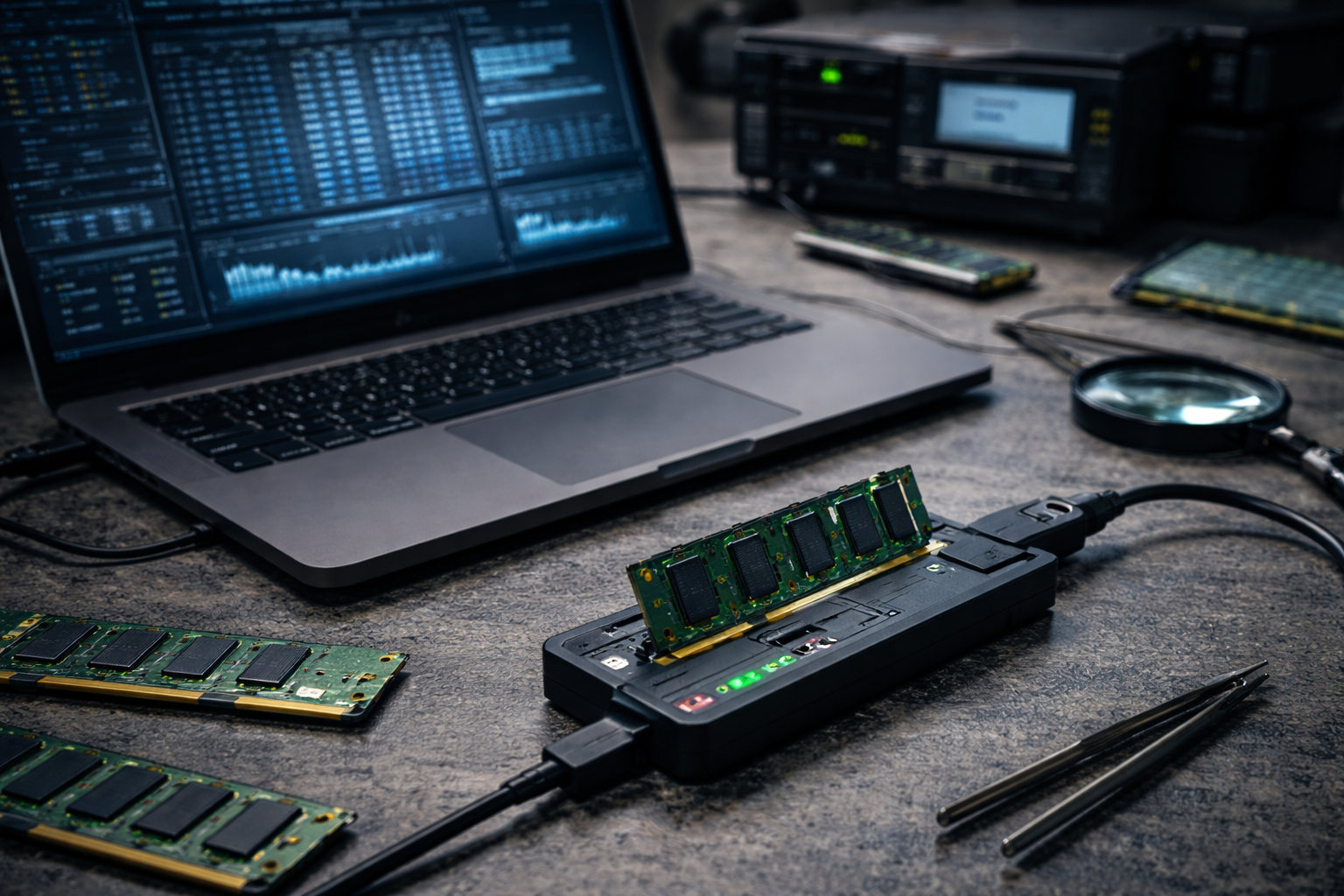
Memory Forensics: Extracting Evidence from RAM
Memory forensics involves collecting and analyzing volatile data stored in a computer's Random Access Memory (RAM). RAM holds information that the system is actively using, such as running processes, user activity, network connections, and temporary data structures.
Unlike disk forensics, which focuses on files and stored logs, memory forensics shows what was happening on a system at a specific moment. Once a device is powered off or restarted, this information is usually lost.
Memory forensics is commonly used during:
- Cybersecurity incident response
- Malware and ransomware investigations
- Insider threat investigations
- Data breach analysis
- Advanced intrusion and threat investigations
Why Memory Forensics Is Critical
Memory contains evidence that cannot be found anywhere else on a system. This includes:
- Active network connections and sockets
- Running processes and their relationships
- Encryption keys and passwords
- Malware artifacts that never touch disk
- Command and control communications
- Rootkit and anti-forensic tool evidence
- User activity and authentication tokens
Types of Evidence Found in Memory
Process Information
Memory analysis reveals detailed information about running processes:
- Process names and executable paths
- Process IDs and parent-child relationships
- Process creation and termination times
- Loaded modules and DLLs
- Process memory allocations and usage
- Hidden or disguised processes
Network Activity
Active network connections and historical network artifacts:
- TCP/UDP connections and listening ports
- IP addresses and domain names
- Network sockets and their associated processes
- DNS cache entries
- ARP table entries
- Recent network communications
Malware and Rootkits
Memory is often the only place to find advanced malware evidence:
- Fileless malware execution
- Malicious code injection
- Rootkit techniques and hooks
- Encrypted payloads and shellcode
- Anti-analysis and anti-forensic measures
- Command and control infrastructure
User Activity and Credentials
Memory can contain sensitive user information:
- Passwords and authentication tokens
- Encryption keys and certificates
- User command history
- Clipboard contents
- Browser sessions and cookies
- Application-specific credentials
Memory Acquisition Methods
Software-Based Acquisition
Common software tools for memory acquisition include:
- FTK Imager: Commercial tool for memory and disk imaging
- Belkasoft RAM Capturer: Free tool for memory acquisition
- DumpIt: Simple command-line memory dumping tool
- WinPmem: Open-source memory acquisition framework
- Linux Memory Dump Tools: LiME, AVML, and fmem
Hardware-Based Acquisition
Hardware methods provide more reliable memory acquisition:
- DMA (Direct Memory Access) attacks
- Thunderbolt and FireWire exploits
- JTAG debugging interfaces
- Cold boot attacks
- Hardware memory analysis devices
Remote Acquisition
Remote memory acquisition techniques include:
- Agent-based collection systems
- PowerShell memory dumping scripts
- WMI-based acquisition methods
- Network-based memory capture
- Cloud instance memory acquisition
Memory Analysis Techniques
Process Analysis
Analyzing running processes and their relationships:
- Process tree reconstruction
- Process parent-child relationships
- Process memory space analysis
- Module and DLL analysis
- Process injection detection
Memory Dump Analysis
Direct examination of memory contents:
- String searching and pattern matching
- Binary data extraction
- File carving from memory
- Registry key extraction
- Configuration data recovery
Network Forensics in Memory
Analyzing network-related evidence in memory:
- Connection state analysis
- Network socket examination
- Packet capture buffer analysis
- Network configuration extraction
- Firewall rule analysis
Popular Memory Forensics Tools
Volatility Framework
Volatility is the most widely used open-source memory forensics framework:
- Supports Windows, Linux, and Mac memory analysis
- Extensive plugin ecosystem
- Command-line interface for automation
- Active community development
- Comprehensive documentation
Commercial Memory Analysis Tools
- Mandiant Memoryze: Enterprise memory analysis
- EnCase Forensic: Integrated memory analysis
- X-Ways Forensics: Advanced memory analysis
- FTK Imager: Memory acquisition and analysis
- Axiom: Modern forensic analysis platform
Memory Forensics in Incident Response
Live Response Procedures
Memory forensics is critical for live incident response:
- Rapid triage of compromised systems
- Identification of active threats
- Containment strategy development
- Evidence preservation before shutdown
- Real-time threat hunting
Malware Analysis
Memory analysis for malware investigations:
- Behavioral analysis of running malware
- Extraction of malware configuration
- Command and control identification
- Anti-analysis technique detection
- Malware family attribution
Challenges in Memory Forensics
Evolving Technologies
- UEFI Secure Boot restrictions
- Virtualization-based security
- Container and microservice environments
- Cloud-based memory architectures
- Mobile device memory structures
Anti-Forensic Techniques
- Memory encryption and protection
- Process hiding and obfuscation
- Anti-debugging and anti-analysis
- Memory wiping and sanitization
- Rootkit and bootkit techniques
Technical Limitations
- Memory size and acquisition speed
- System stability during acquisition
- Tool compatibility and reliability
- Interpretation complexity
- Resource-intensive analysis
Best Practices for Memory Forensics
Acquisition Best Practices
- Document system state before acquisition
- Use multiple acquisition methods when possible
- Verify memory dump integrity with hashes
- Maintain proper chain of custody
- Consider system impact during acquisition
Analysis Best Practices
- Start with high-level process analysis
- Document all findings and observations
- Correlate memory evidence with disk artifacts
- Use multiple analysis tools for validation
- Maintain analysis reproducibility
Legal and Compliance Considerations
Evidence Admissibility
- Proper acquisition methodology
- Tool validation and certification
- Chain of custody documentation
- Expert witness qualifications
- Analysis reproducibility
Privacy and Data Protection
- Compliance with data protection regulations
- Handling of sensitive personal information
- Secure storage of memory dumps
- Access control and authorization
- Data minimization principles
The Future of Memory Forensics
Emerging Technologies
- AI-powered memory analysis
- Automated threat detection
- Real-time memory monitoring
- Cloud memory forensics
- IoT device memory analysis
Advancing Capabilities
- Enhanced malware detection
- Better visualization tools
- Improved automation
- Cross-platform integration
- Scalable analysis frameworks
Conclusion
Memory forensics is an essential discipline in modern cybersecurity and digital investigations. The ability to capture and analyze volatile memory provides unique insights into system activity that cannot be obtained through traditional disk forensics.
As threats become more sophisticated and systems more complex, memory forensics will continue to play a critical role in incident response, malware analysis, and digital investigations. Organizations must invest in tools, training, and procedures to effectively leverage memory forensics capabilities.